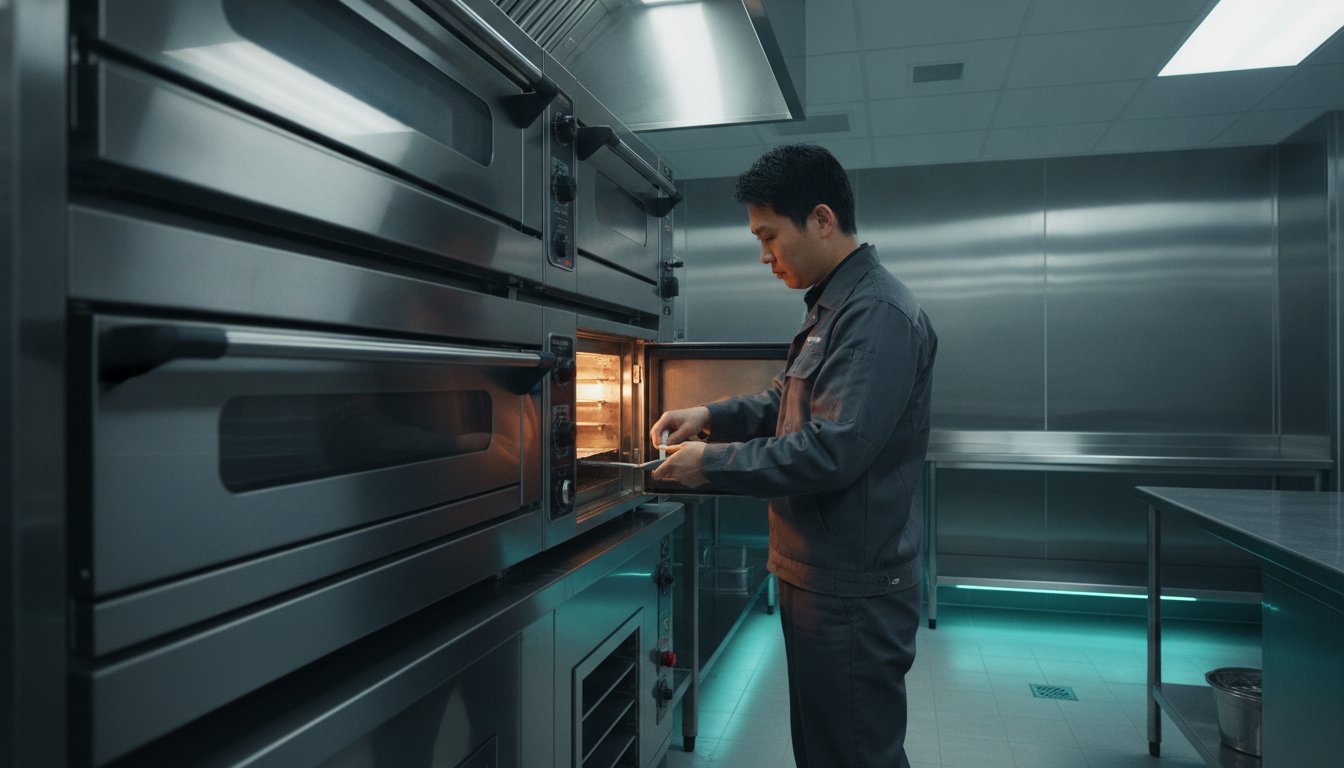
Did you know that commercial equipment costs have risen by up to 8% this year alone? In a high-volume kitchen, your oven is the heart of your operation, and skipping a professional conveyor oven maintenance checklist can lead to expensive repairs or inconsistent bakes that hurt your reputation. You already know that unplanned downtime during a peak rush is more than a headache; it’s a direct threat to the hospitality and quality your guests expect from you.
We want to help you protect your investment with a sense of reliability and expert care. This guide provides a clear, step-by-step framework to ensure your equipment stays in peak condition for years to come. By following these guidelines, you’ll lower your energy bills through improved efficiency and stay compliant with current 2023 NFPA 86 safety standards. We’ll cover everything from daily cleaning rituals to the quarterly technical checks that keep your kitchen running like a well-oiled machine.
Key Takeaways
- Shift your mindset from reactive repairs to a proactive framework that safeguards your kitchen’s heartbeat and offsets rising equipment costs.
- Implement a daily conveyor oven maintenance checklist within your closing routines to ensure every dish meets your high standards for consistency and quality.
- Master the transition from routine staff cleaning to expert mechanical inspections, utilizing advanced tools like thermal imaging to catch hidden issues early.
- Recognize the financial “tipping point” where upgrading to modern Lincoln Impinger, XLT, or EDGE technology offers better long-term value than further repairs.
The Business Case for a Rigorous Conveyor Oven Maintenance Schedule
In the high-stakes world of high-volume kitchens, your equipment is more than just a collection of stainless steel and heating elements. It’s the engine room of your business. If you’ve ever stood in a kitchen during a Friday night rush, you know that the rhythm of your team depends entirely on the reliability of your oven. When you understand what is a conveyor oven and how it facilitates rapid, consistent cooking, you realize that any hiccup in its performance ripples through your entire operation. A well-executed conveyor oven maintenance checklist isn’t just a chore; it’s the insurance policy that keeps your doors open and your guests satisfied.
Adopting an “emergency-only” repair mentality is a gamble that rarely pays off. While it might seem like you’re saving money by skipping routine checks, the hidden costs of a breakdown are staggering. You aren’t just paying for a technician’s emergency travel rates or expedited parts; you’re losing the trust of every customer whose order was cancelled or delayed. Consistent care protects your signature bake profile. It ensures that the golden-brown crust your customers rave about in reviews remains identical every single time they visit. Beyond the plate, reliable equipment supports a healthy kitchen culture. When your team trusts their tools, morale stays high, and the frantic stress of equipment failure is replaced by the steady, confident flow of professional service.
Protecting Your Capital Investment
Your XLT Pizza Ovens or EDGE Pizza Ovens represent a significant capital investment in your professional future. By adhering to a strict conveyor oven maintenance checklist, you can significantly extend the operational life of these machines, often adding years of high-performance service that wouldn’t be possible through neglect. Beyond daily use, maintaining a detailed service logbook dramatically increases the resale value of your restaurant equipment. Prospective buyers look for proof of expert care. Preventive maintenance is the strategic balance between maximizing daily operational uptime and ensuring long-term mechanical longevity.
Energy Efficiency and Operational Costs
Efficiency is a cornerstone of a profitable kitchen, especially with rising utility costs. When burners are coated in grease or dust, they can’t combust fuel efficiently, forcing the system to draw more power to reach target temperatures. Similarly, airflow obstructions in the fingers or cooling fans force motors to overwork, which increases your monthly electricity draw and leads to premature component failure. By keeping the internal pathways clear, you eliminate “cold spots” that lead to undercooked food. This precision reduces food waste and ensures your kitchen remains as sustainable as it is productive.
Daily Operational Maintenance: Protecting Your Pizza Quality
A high-volume kitchen is a whirlwind of activity, but your equipment shouldn’t suffer for your success. Integrating a “clean as you go” philosophy into your staff’s workflow is the best way to maintain hospitality standards during the rush. When crumbs or stray toppings fall onto the belt, they don’t just disappear. They carbonize, create smoke, and eventually affect the flavor of your crust. Encourage your team to use soft brushes to clear the loading and unloading areas throughout the day. It takes seconds, but it prevents hours of scrubbing later. Monitoring performance indicators like bake time drift or unusual noises during active service can alert you to issues before they become disasters.
To do this right, you need the right tools. Avoid harsh, abrasive chemicals that can strip the protective finish off your stainless steel. Instead, stick to non-corrosive cleaners and soft-bristle brushes. These tools are gentle enough to protect the delicate components of your Lincoln Impinger or XLT ovens while being effective enough to remove daily grime. A reliable conveyor oven maintenance checklist starts with the people who use the machine every day, ensuring that every pizza that slides out is as perfect as the last.
The Nightly Closing Checklist
Your closing routine is the most critical time for your oven. Following a consistent sequence prevents damage and prepares you for a seamless opening the next morning. It’s about more than just cleanliness; it’s about reliability.
- Step 1: Cool-Down Protocols. Never turn off the main power immediately. Allow the cooling fans to run until the internal temperature drops to the manufacturer’s recommended level. This prevents internal component warping from trapped heat.
- Step 2: Crumb Trays. Remove and empty all crumb trays. This is a vital fire safety step, as accumulated debris can easily ignite during the next day’s preheat.
- Step 3: Exterior Surfaces. Wipe down the loading and unloading trays with a damp cloth and mild cleaner. A clean exterior reflects the professional standards of your kitchen.
- Step 4: Belt Inspection. Quickly check the conveyor belt for visible debris or tension issues. If the belt looks loose or has caught a stray utensil, it’s better to address it now than during the morning rush.
Maintaining Optimal Airflow
Airflow is everything in a conveyor system. If the air fingers are clogged with carbon buildup, the heat distribution becomes uneven, leading to “cold spots” and inconsistent browning. Spend a moment each week checking that the end-caps are clear and that air can flow freely through the impingement holes. For more tips on optimizing your setup, explore our insights on The Modern Restaurant Kitchen: A 2026 Guide to High-Volume Efficiency. If you ever feel overwhelmed by the technical side of things, our expert restaurant equipment team is always here to guide you toward the best solutions for your kitchen.
Weekly and Monthly Deep-Cleaning Protocols for High-Volume Ovens
While the daily wipe-down keeps your kitchen looking its best, true reliability lives in the details you can’t see from the outside. Transitioning from surface-level hygiene to sub-component care is what separates a standard operation from a truly professional one. To keep your high-volume kitchen running without a hitch, you’ll want to schedule these deeper tasks during your quietest hours. Many of our partners find that a Sunday evening or a slow Monday morning is the perfect time to tackle these items without disrupting the flow of service.
Grease and flour dust are the silent enemies of your oven’s electronics. Over time, these particles drift into the control box, creating a layer of insulation that traps heat and leads to expensive circuit board failures. Keeping these sensitive areas clean is a vital part of your conveyor oven maintenance checklist. By taking a proactive approach to sub-component hygiene, you’re not just cleaning. You’re protecting the sophisticated technology that makes your XLT or Lincoln Impinger ovens so effective.
Weekly Component Deep-Dives
Once a week, it’s time to get hands-on with the parts that do the heavy lifting. Start by removing the air fingers and plates. These components direct the heat exactly where it needs to go, but they can quickly become clogged with carbonized food particles. Soak them in a mild, non-corrosive solution to restore full airflow. While the fingers are soaking, turn your attention to the cooling fans. In the high-temperature environment of a professional kitchen, these fans are the only thing keeping your motors from overheating. Use a vacuum to clear dust from the intakes and exhaust vents. Finally, give the drive chain a quick look. If it looks dry or sounds gritty, apply a small amount of food-grade lubricant. This simple step prevents the metal-on-metal friction that leads to snapped chains during a busy Friday night.
Monthly Mechanical Health Checks
Your monthly routine should focus on the structural integrity of your equipment. Begin with the conveyor belt itself. Check the tension to ensure it isn’t straining the motor, and look closely for any frayed edges or missing links that could snag during operation. Don’t overlook the glass door gaskets. If these seals are cracked or brittle, you’re losing heat. This drives up utility costs and creates inconsistent bake times. A quick wipe and inspection can save you hundreds in energy bills over the course of a year. Lastly, check the oven stands and casters. High-volume ovens are heavy, and a loose bolt or an unlevel stand can put unnecessary stress on the frame. Ensuring everything is secure and level keeps your workspace safe and your equipment stable for the long haul. This monthly portion of your conveyor oven maintenance checklist is your best defense against the wear and tear of a successful, busy season.
Quarterly Mechanical Inspections: Motors, Belts, and Burners
Every three months, your maintenance routine needs to shift from internal cleaning to technical precision. While your staff handles the daily and weekly grime with ease, quarterly checks require a more specialized eye. This is the point in your conveyor oven maintenance checklist where you verify that the mechanical heart of your kitchen is beating as it should. One of the most effective tools for 2026 is thermal imaging. By scanning the control box and motor housing, a professional can identify electrical hot spots that aren’t visible to the naked eye. Catching a loose connection or a failing capacitor now prevents a catastrophic failure during your busiest season.
Consistency is the hallmark of a great kitchen. If your “set point” on the digital display doesn’t match the actual temperature inside the chamber, your bake quality will suffer. Calibrating these sensors, along with checking gas pressure and burner alignment, ensures that your Lincoln Impinger or EDGE ovens operate exactly as the manufacturer intended. It’s about maintaining that perfect, neighborly hospitality through every dish you serve. When your equipment is calibrated correctly, you’ll notice more than just better food. You’ll see lower utility bills and a smoother, more predictable kitchen flow that keeps your team calm and focused.
Advanced Electrical and Gas Inspections
Safety and efficiency go hand in hand in a professional environment. During a quarterly review, it’s vital to test emergency shut-off valves and inspect the integrity of your gas lines to ensure everything is secure. We also recommend a deep look at motor brushes and bearings. If these components show signs of excessive wear, replacing them proactively is much cheaper than a full motor swap later. For those looking to grow their footprint, check out our Commercial Restaurant Equipment Guide: Scaling Your Kitchen for Success in 2026 for more on building a resilient back-of-house operation.
The Spare Parts Inventory
No matter how diligent you are, parts will eventually wear out under the pressure of high-volume service. To bridge the “hospitality gap” during an unexpected breakdown, every kitchen should keep a critical spares kit on-site. Think of it as a neighborly helping hand for your future self. This gap is the time between a machine failing and a guest receiving their meal; in a busy restaurant, that time is money. Your inventory should include:
- Extra fuses and electrical connectors
- Master belt links and pins
- A backup drive motor
- Replacement temperature probes
Having these items ready means a repair takes minutes instead of days. If you’re ready to upgrade your lineup or need expert advice on the best commercial pizza ovens for your specific needs, our team is here to help you find the perfect fit for your community.
When Maintenance Isnt Enough: Selecting Your Next High-Performance Oven
Even the most diligent adherence to a conveyor oven maintenance checklist eventually meets the reality of mechanical aging. There comes a day when the costs of one more repair outweigh the benefits of keeping an older unit in service. We call this the tipping point. If your maintenance logs show that you’re spending more on emergency calls than on routine care, or if your oven is struggling to keep up with peak demand despite regular tuning, it’s time to consider a transition. Modern technology has moved fast. Today’s Lincoln Impinger, XLT, and EDGE ovens are designed to provide higher throughput within the same physical footprint, allowing you to serve more guests without a costly kitchen remodel.
Choosing your next high-performance oven is about more than just numbers; it’s about the future of your hospitality. Partnering with a professional supplier ensures that your transition is seamless and that you aren’t just buying a machine, but an upgrade to your lifestyle. We believe in providing solutions that feel like a steady hand on your shoulder, guiding you toward equipment that won’t let you down when the dining room is full.
Evaluating Modern Efficiency Standards
Newer models have revolutionized heat management in the kitchen. By directing heat more precisely into the product and less into your workspace, brands like XLT and EDGE significantly lower ambient temperatures. This makes the environment more comfortable for your team and reduces the load on your HVAC system. These designs often feature tool-less disassembly, which simplifies your conveyor oven maintenance checklist and reduces labor costs during deep cleans. For a deeper look at how to choose the right partner for these upgrades, read our Navigating Restaurant Equipment Supply: A Professional Sourcing Guide for 2026.
The Southern Select Equipment Advantage
At Southern Select Equipment, we treat every transaction with the integrity and warmth of a neighborly handshake. Our commitment to providing heavy-duty, high-performance machinery is rooted in our deep respect for the hospitality industry. We’ve curated a selection of XLT, EDGE, and Lincoln Impinger ovens because they represent the industry gold standard for reliability and bake quality. Our expert team doesn’t just sell equipment; we support your long-term success by helping you find the perfect fit for your specific kitchen needs. Whether you are looking for commercial pizza ovens or need advice on scaling your operations, we are here to ensure your kitchen never skips a beat.
Securing Your Kitchen’s Future for 2026 and Beyond
Maintaining a high-volume kitchen requires a blend of daily discipline and long-term vision. By implementing a rigorous conveyor oven maintenance checklist, you’ve taken the first step toward ensuring your equipment remains as reliable as your hospitality. From the nightly cool-down protocols to the advanced quarterly thermal scans we’ve discussed, every action you take protects your capital investment and your reputation. You now have the framework to balance operational uptime with mechanical longevity, ensuring your team stays confident even during the busiest Friday night rushes.
When the time comes to upgrade your lineup or seek expert guidance, you don’t have to navigate the transition alone. Southern Select Equipment is proud to be an authorized provider of XLT and EDGE ovens, offering expert hospitality equipment sourcing with the convenience of national US delivery and support. Our team acts as your trusted guide, helping you select the heavy-duty machinery that best fits your specific kitchen’s workflow. Explore Our High-Performance Commercial Pizza Ovens and let’s build a more efficient, successful kitchen together. Your future guests are waiting for that perfect bake, and we’re here to help you deliver it every single time.
Common Questions About Conveyor Oven Care
How often should I professionally service my conveyor oven?
You should schedule a professional service for your conveyor oven every three months if you operate a high-volume kitchen. While your team handles daily cleaning, a certified technician needs to perform deep mechanical inspections quarterly to ensure gas pressure and electrical components remain within manufacturer specifications. This regular cadence prevents the small issues from becoming catastrophic failures that could disrupt your hospitality and guest experience.
What are the signs that my conveyor belt needs immediate replacement?
Look for frayed edges, missing links, or a belt that frequently jumps or slips on the drive sprockets. If you notice the belt is stretching beyond the adjustment range of the tensioners, it’s a clear sign of metal fatigue. Addressing these visual cues immediately prevents a total belt snap during a busy shift, ensuring your kitchen keeps moving without a hitch. Regular belt inspections are a vital part of any professional conveyor oven maintenance checklist.
Can I use standard oven cleaner on my commercial conveyor oven?
No, you should avoid using standard caustic oven cleaners on your professional equipment. These harsh chemicals can strip the protective finish from the stainless steel and damage sensitive internal sensors or gaskets. Instead, stick to non-corrosive, manufacturer-approved cleaners and soft brushes. This gentle approach protects your long-term investment and ensures your food remains free from chemical residues.
Why is my conveyor oven smoking during the pre-heat phase?
Smoking during pre-heat is usually caused by accumulated food debris, grease, or flour dust burning off the crumb trays or air fingers. If you haven’t emptied your trays recently, the high heat of the pre-heat cycle will ignite these small particles. Consistent daily cleaning of the trays and loading areas will eliminate this issue and reduce the risk of fire in your kitchen while maintaining a clean, professional atmosphere.
How do I know if my oven temperature is actually accurate?
You can verify accuracy by placing an independent, calibrated digital thermometer or a puck style temperature logger on the conveyor belt. Run it through the chamber and compare the peak reading to your digital display’s set point. If you find a discrepancy of more than a few degrees, it’s time for a professional calibration of your internal temperature probes to ensure every pizza has a consistent bake.
Is it normal for the conveyor motor to make a humming sound?
A faint, steady hum is common for electric motors, but a loud, vibrating, or grinding sound is a cause for concern. These noises often signal a failing start capacitor or worn-out bearings within the motor housing. If the sound changes in pitch or volume when you adjust the belt speed, contact a technician to inspect the drive system before it seizes entirely and causes unplanned downtime.
What should I do if the conveyor belt stops moving during service?
First, check the loading and unloading areas for any physical obstructions like a stray utensil or a jammed pan. If the path is clear, check your control panel for error codes and verify that the circuit breaker or internal fuse hasn’t tripped. If the motor is hot to the touch but the belt won’t budge, turn off the power immediately to prevent further electrical damage and call for expert support.
How can I reduce the heat output of my oven into the kitchen?
Start by verifying that your ventilation hood is operating at peak performance and that the filters are clean to allow maximum heat extraction. If your kitchen remains uncomfortably hot, it might be time to look at newer models from brands like XLT or EDGE. These modern ovens feature advanced insulation and heat management technology that keeps more energy inside the bake chamber and out of your workspace, improving both efficiency and staff comfort.