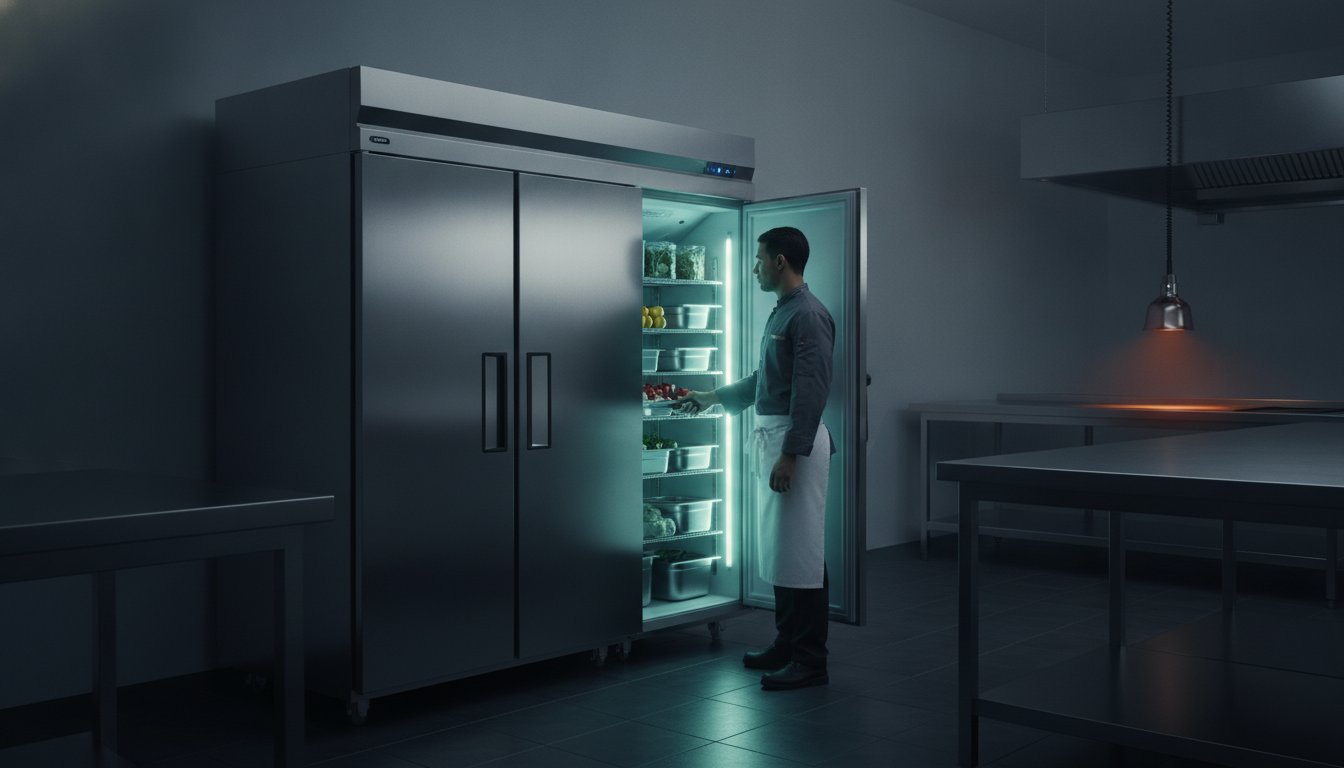
What if your most expensive equipment failure isn’t the one that stops running, but the one that simply refuses to stay cold during a 100-degree lunch rush? Your commercial reach-in refrigerator is the silent heartbeat of your kitchen, yet it’s often the single point of failure that can turn a busy service into a disaster. In 2026, a “good enough” cooling unit is no longer an option. With the EPA’s AIM Act now fully prohibiting high-GWP refrigerants in new equipment, your next purchase isn’t just about keeping ingredients cold. It’s about future-proofing your business against rising service costs and regulatory shifts.
At Southern Select Equipment, we understand that the pressure of maintaining a seamless operation is heavy, especially when inconsistent temperatures lead to food waste or high utility bills. You deserve the peace of mind that comes with reliable, professional-grade equipment. This guide will walk you through the technical nuances of the 2026 market, from ENERGY STAR efficiency standards to the latest workflow integrations. We’ll explore the shift to natural refrigerants and how to choose a Select configuration that brings the warmth of Southern hospitality and expert reliability to your back-of-house.
Key Takeaways
- Identify the critical performance differences between residential units and professional-grade refrigeration to ensure your equipment survives the heat of a high-volume kitchen.
- Navigate technical specifications, such as section counts and door styles, to balance energy savings with the need for quick visual inventory.
- Discover how to choose a commercial reach-in refrigerator that lowers utility costs through ENERGY STAR® efficiency and modern R290 hydrocarbon refrigerants.
- Improve your kitchen’s daily rhythm by strategically placing refrigeration to reduce steps for prep cooks and create a seamless workflow.
- Learn why partnering with a trusted local guide ensures you receive a curated selection of equipment backed by professional integrity and hospitality.
The Role of Reach-In Refrigeration in High-Volume Kitchens
Imagine the peak of a Friday night rush. Your kitchen is humming, the air is thick with the scent of searing proteins, and every second counts. In this high-stakes environment, a commercial reach-in refrigerator is much more than a simple storage box. It is the silent partner that ensures your ingredients remain fresh and your service stays on track. While a home fridge is designed to be opened a few times a day, a professional unit is engineered to withstand the relentless pace of a commercial line where the door might swing open every sixty seconds.
The technical heart of this equipment lies in its ability to recover. Since the early history of mechanical refrigeration, the primary challenge has been maintaining stability against external heat. In a professional kitchen, every time a door opens, cold air escapes. A residential unit would struggle to pull those temperatures back down, leaving food in the “danger zone” where bacteria thrive. Professional-grade refrigeration uses powerful, high-torque compressors and advanced airflow patterns to snap temperatures back to safety almost instantly. This consistency doesn’t just protect your guests; it protects your bottom line by drastically reducing food waste from spoilage.
Durability is the other half of the equation. We often see kitchens where equipment fails because it simply wasn’t built for the “Select” level of use we expect in the South. You need heavy-duty door hinges that won’t sag after a month of heavy use and reinforced shelving that can support fifty-pound tubs of sauce without buckling. It’s about having a foundation of integrity in your kitchen. When your equipment is reliable, your team can focus on the art of hospitality rather than worrying about whether the prep is staying cold.
Reach-In vs. Walk-In: Finding the Right Balance
Choosing between bulk storage and point-of-use access is a balancing act. While a walk-in is essential for your weekly inventory, a reach-in unit keeps your most-used items exactly where they’re needed. This reduces “steps” for your prep cooks, making the entire operation more seamless. Before you buy, consider your aisle space. A standard swing door requires a clear path to open fully, so in narrow kitchens, you’ll want to measure carefully to ensure your workflow remains unobstructed.
The Impact of Ambient Kitchen Temperature
Your kitchen’s environment is a battlefield of heat. Placing your refrigerator too close to a pizza oven or a range can be a costly mistake. High ambient temperatures force the compressor to work overtime, which leads to frequent breakdowns and higher energy bills. Always look for units with a high climate class rating, designed to perform even when the kitchen reaches 100°F. Maintaining a steady cold chain from the moment a delivery arrives to the second it hits the prep line is the only way to guarantee the quality your community expects.
Technical Specifications: Doors, Sections, and Compressors
Selecting a commercial reach-in refrigerator requires looking beyond the shiny exterior to the mechanical heart of the unit. Whether you’re outfitting a cozy coastal cafe or a high-volume restaurant, the configuration you choose directly impacts your daily rhythm and food safety integrity. It’s about finding that perfect balance between storage capacity and the physical constraints of your kitchen layout.
Section counts are your first decision point. Single-door units offer agility in tight prep areas, while massive three-section cabinets provide the bulk storage needed for large-scale operations. However, it isn’t just about size. Door style is a critical efficiency factor. Solid doors provide the best insulation, but glass doors allow your team to check inventory without letting cold air escape. For kitchens with high foot traffic, half-door configurations are a smart choice. These split doors ensure you only expose half the cabinet to ambient air, which helps the compressor maintain stability during the lunch rush.
We always recommend stainless steel interiors over aluminum. In a busy kitchen, spills happen and cleaning is constant. Stainless steel resists corrosion and stands up to heavy-duty use, aligning with our commitment to providing only the most durable restaurant equipment for our clients. If you’re ready to find a unit with the right specs for your space, our team can help you select the perfect fit.
Top-Mount vs. Bottom-Mount Compressors
This is where many buyers feel stuck. Bottom-mount compressors are popular because they’re easier to service and they lift the bottom shelf to a more ergonomic height, so your staff doesn’t have to crouch. On the flip side, top-mount compressors are superior in dusty or greasy environments. Since heat rises, they don’t radiate warmth into the cabinet from the floor, and they’re less likely to clog with floor debris. Your choice should depend on your ceiling height and how often you deep-clean your floors.
Advanced Temperature Controls and Monitoring
Precision is non-negotiable when following FDA safe food storage guidelines. Modern units now feature digital thermostats and external displays that let you verify temperatures at a glance. We also suggest looking for models with proactive alarms. If a door is left ajar or the temperature spikes, you’ll know before it becomes a costly loss. Self-closing door mechanisms have also become a standard, acting as a final fail-safe for energy preservation.
Evaluating Energy Efficiency and Long-Term ROI
When you invest in a commercial reach-in refrigerator, you aren’t just buying a piece of equipment. You’re making a ten-year commitment to your utility provider and your kitchen’s operational budget. While the initial purchase price often dominates the conversation, the true cost of ownership is hidden in the monthly energy bills and the longevity of the compressor. Choosing a unit with high energy efficiency isn’t just an environmental statement. It’s a savvy business decision that prioritizes long-term stability and integrity.
The most reliable way to gauge efficiency is through the ENERGY STAR® Version 5.0 certification. These units are designed to use up to 24% less energy than standard models, which can result in significant operational savings over the life of the machine. Beyond the monthly savings, many local utility providers offer rebates for businesses that choose certified equipment, often offsetting a portion of the upfront cost. To get a deeper look at how these ratings impact your bottom line, consulting a comprehensive buying guide can help you compare the long-term ROI of different models.
Preventative maintenance remains the secret to protecting that return on investment. A dusty condenser coil or a worn-out fan motor forces the unit to run longer and hotter, which shortens the lifespan of the compressor. By scheduling regular cleanings and inspections with an experienced commercial refrigeration partner like yourcoolguy.com, you ensure your equipment operates at peak efficiency. This proactive approach reflects the same care and hospitality you show your guests, ensuring your kitchen runs without a hitch during the busiest hours.
Insulation and Gasket Integrity
The efficiency of your refrigerator depends heavily on its ability to keep the cold in and the heat out. High-density, CFC-free polyurethane insulation acts as a robust thermal barrier, maintaining internal temperatures even when the kitchen gets sweltering. However, the first line of defense is always the magnetic door gasket. These seals must be airtight to prevent energy leaks. We recommend selecting units where gaskets are easy to remove and clean without tools. This small detail makes it much simpler for your team to maintain a seamless seal and prevent unnecessary energy waste.
Refrigerant Trends and Regulations in 2026
As of January 1, 2026, the landscape of commercial refrigeration has changed significantly due to the EPA’s AIM Act. New equipment is now prohibited from using high-Global Warming Potential (GWP) refrigerants like R-404A. Instead, the industry has shifted toward natural refrigerants such as R290 (propane). These hydrocarbon refrigerants are not only more eco-friendly but also more efficient at heat transfer. Future-proofing your kitchen means choosing a commercial reach-in refrigerator that complies with these new standards today. This ensures you won’t face skyrocketing service costs or parts shortages for obsolete systems down the road.
Workflow Integration: Optimizing Your Kitchen Layout
Efficiency in a high-volume kitchen is measured in inches and seconds. While we previously discussed technical specs and energy ROI, the physical placement of your commercial reach-in refrigerator determines the actual rhythm of your service. A poorly placed unit forces your team into a frantic dance of “extra steps,” leading to fatigue and slowed ticket times. By strategically positioning your refrigeration as a point-of-use station, you create a seamless flow that honors both your staff’s effort and the guest’s experience.
In bakery and pastry settings, the synergy between your cooling and mixing stations is vital. For instance, moving delicate doughs or batters from high-performance Hobart mixers to a cooling environment must happen quickly to maintain product integrity. Roll-in refrigerators are the gold standard here, allowing staff to slide entire racks of sheet pans directly from the mixer area into the fridge without manual unloading. Similarly, pass-thru units can bridge the gap between your back-of-house prep team and the front-of-house service line, allowing one team to load fresh ingredients while the other retrieves them for plating.
We believe that a kitchen should feel like a well-managed home, where everything has its place and the environment supports the people within it. If you are looking to refine your layout with the right commercial reach-in refrigerator, our team is ready to help you find a Select solution that fits your unique footprint.
Refrigeration for Specialized Menus
Your menu dictates your cooling needs. If you’re running a pizza concept or a sandwich shop, dual-temp units or specialized reach-ins with precise humidity controls are essential for keeping dough supple and greens crisp. Coordinating these units with your other commercial restaurant equipment ensures that your cold chain remains unbroken from the moment of prep until the final garnish is added. This level of coordination is what separates a standard kitchen from a truly professional operation.
Ergonomics and Staff Safety
The comfort of your team is a core value of Southern hospitality. Look for units with full-length door handles that are easy to grab from any angle during a peak rush. Interior LED lighting is another subtle but powerful upgrade; it provides better visibility than traditional bulbs and generates significantly less heat, which helps the compressor stay stable. Finally, always opt for heavy-duty casters rather than fixed legs. Mobility is key for deep cleaning and ensuring your kitchen meets the highest sanitation standards without back-breaking labor.
Choosing Excellence: The Southern Select Equipment Partnership
Selecting the right commercial reach-in refrigerator is a high-stakes decision that affects your daily operations for years to come. Many suppliers treat this as a simple transaction, shipping a unit and walking away. At Southern Select Equipment, we believe in a different path. Our approach is rooted in the values of Southern hospitality and professional integrity. We don’t just provide equipment; we offer a long-term partnership that ensures your kitchen remains the reliable heart of your operation. You deserve a partner who is as invested in your success as you are.
We are deliberate about the brands we carry. By focusing on top-tier names like True and Hobart, we ensure that every piece of machinery in our curated inventory meets our high standards for durability and performance. Whether you are outfitting a single coastal cafe or managing a national rollout, our seamless logistics network gets your equipment where it needs to be, exactly when you need it. It’s about creating a stress-free procurement process that lets you focus on what you do best: serving your community. We take pride in handling the technical heavy lifting so you can focus on the art of hospitality.
The Value of Expert Consultation
Every menu has a unique rhythm. A bakery requires different humidity levels than a steakhouse, and a high-volume cafe needs faster temperature recovery than a boutique bistro. Our team acts as your Trusted Local Guide, using our insider knowledge to match technical specifications to your specific volume requirements. We take a client-centric approach, looking at the people and the places behind the properties. We want to ensure that your investment in a commercial reach-in refrigerator provides the reliability you need to thrive. We’re here to answer the tough questions about compressor placement or door configurations, ensuring your choice is the right one for your specific footprint.
Building Your Dream Kitchen for 2026
Success in the coming years requires more than just hard work; it requires the right tools. Equipping a commercial kitchen for the 2026 landscape means balancing high-volume output with the strict energy mandates and refrigerant regulations we’ve discussed. By integrating reliable refrigeration into a modern restaurant kitchen, you set a foundation for growth and excellence. We invite you to explore our curated selection of commercial refrigeration units today and discover the difference that a dedicated, neighborly partner can make in your professional journey. Let’s build something lasting together.
Future-Proofing Your Kitchen with Southern Hospitality
Selecting a new commercial reach-in refrigerator is about more than just checking a box on a spec sheet. It’s about ensuring your ingredients stay safe under the 2026 regulations while optimizing your kitchen’s daily rhythm. You’ve seen how the right compressor placement and door configuration can lower utility bills and reduce staff fatigue. These technical details are the foundation of a kitchen that runs with integrity and grace.
At Southern Select, we bring decades of experience in restaurant liquidations and sales to help you navigate these high-stakes choices. As a trusted national distributor of top-tier brands like XLT and Hobart, we provide an expert consultative approach that goes beyond a simple transaction. We’re here to act as your guide, matching you with equipment that fits your unique volume and vision.
Ready to upgrade your space? Browse Our Professional Reach-In Refrigeration Inventory to find your next reliable partner. We look forward to helping you build a kitchen that reflects the very best of your hospitality.
Frequently Asked Questions
How much space is required for a commercial reach-in refrigerator?
You should allow at least two to three inches of clearance around the sides and back of your unit to ensure proper airflow. Without this breathing room, the compressor will overwork and fail prematurely. Always measure your entryways and narrow aisles before delivery to ensure a seamless installation that doesn’t disrupt your team’s natural flow.
What is the difference between top-mount and bottom-mount compressors?
Top-mount compressors are ideal for greasy or dusty environments as they don’t pull debris from the floor, while bottom-mount units offer easier maintenance and ergonomic access to the bottom shelf. Since heat rises, top-mount units are often more efficient in high-heat areas. Your choice should depend on your specific kitchen ceiling height and floor cleaning protocols.
Can a reach-in refrigerator be used in place of a walk-in cooler?
A commercial reach-in refrigerator is designed for point-of-use access, while a walk-in is meant for high-volume bulk storage. While a reach-in provides speed and convenience for line cooks, it cannot match the thermal mass or storage capacity of a walk-in. Most professional kitchens find the best balance by using both to manage their daily inventory turnover effectively, or by utilizing mobile solutions like KC Frost Wagon when temporary overflow cooling is required for large events.
How often should the condenser coils be cleaned on a commercial refrigerator?
You must clean your condenser coils at least once every 30 to 90 days to maintain peak efficiency and integrity. In kitchens with heavy flour use or high grease, monthly cleaning is a non-negotiable part of professional equipment care. Neglecting this simple task is the leading cause of compressor failure and higher than necessary energy bills.
What are the benefits of using glass doors on a reach-in unit?
Glass doors allow your staff to perform a visual inventory without opening the unit, which keeps the cold air inside where it belongs. They are excellent for front-of-house displays or high-speed prep lines where seeing ingredients at a glance is vital for hospitality. However, keep in mind that glass provides slightly less insulation than solid stainless steel doors.
What is the ideal temperature range for a commercial reach-in refrigerator?
The ideal temperature range for a commercial reach-in refrigerator is between 33°F and 40°F to stay compliant with FDA food safety standards. Keeping your unit within this precise range prevents the growth of harmful bacteria while ensuring your ingredients don’t freeze. Modern digital controllers help you monitor these levels with professional precision throughout the day.
How long does a commercial-grade reach-in refrigerator typically last?
A professional-grade unit typically lasts between 10 and 15 years when it’s treated with the care and respect it deserves. Regular maintenance, such as gasket inspections and coil cleanings, can push your equipment toward the longer end of that spectrum. Investing in a quality brand from the start is the best way to ensure long-term reliability for your business.
Are ENERGY STAR® certified commercial refrigerators worth the investment?
Yes, ENERGY STAR® certified units are a wise investment because they can use up to 24% less energy than standard models. This leads to lower utility bills and often makes you eligible for local energy rebates that help offset the initial purchase price. It’s a responsible way to manage your kitchen’s resources while maintaining the high-volume performance you need.